


Last Updated: November 10, 2026
Quick Summary
Start with the layout, not the decor. Choose one focal point such as the sofa, keep walkways at least 90 cm wide, and limit your palette to three neutral tones. Add only pieces that earn their place in the minimalist living room.
- Pick one focal point, such as the sofa, a fireplace, or a window with a view.
- Keep the coffee table about 45 cm from the sofa and leave walkways of at least 90 cm.
- Limit the palette to three tones: one for walls, one for large furniture, one accent.
- Keep only one or two decorative objects per surface and store the rest out of sight.
- Hang one large piece of wall art at roughly 150 cm from the floor, centered over the focal point.
Table of Contents
- Start With a Layout That Breathes
- Choose a Neutral Palette and Limit It to Three Tones
- Declutter Surfaces and Build Smart, Hidden Storage
- Pick Clean-Lined Furniture and Layer Natural Textures
- Hang Wall Art Without Overwhelming the Room
- Furnish on a Budget Without Losing the Look
- Book Your Wall Art Consultation Next Step
- Frequently Asked Questions
Start With a Layout That Breathes
A minimalist living room works because every piece has room to be seen. Styling starts with the layout, not the decor. Most rooms feel cramped because furniture is pushed against the walls, not because there is too much in them. The fix is to plan the space first, then add only what earns its place.
Placing Your Sofa and Focal Point
Start by choosing one focal point. This is usually the sofa, a fireplace, or a window with a view. Everything else should support it.
A common approach is to float the sofa slightly away from the wall, which makes the room feel deliberate rather than crowded. Keep the coffee table around 45 cm from the sofa so people can reach it without stretching.
- Pick one focal point and build around it
- Leave a clear walkway of at least 90 cm
- Keep side tables at the same height as the sofa arm
- Avoid placing furniture in every corner
Creating Space for Movement
Walkways matter as much as furniture. If someone has to turn sideways to pass the sofa, the layout is too tight.
Try the "empty square" test: sit in the room and check whether you can cross it without stepping around anything. If you cannot, remove one piece before you buy anything new.
The layout guidelines below give concrete measurements for placing furniture in a minimalist living room.
| Layout element | Recommended measure | Note |
|---|---|---|
| Coffee table distance from sofa | About 45 cm | Easy to reach without stretching |
| Clear walkway | At least 90 cm | Avoids turning sideways to pass |
| Side table height | Same as sofa arm | Keeps the line of the room consistent |
| Focal point | One only | Sofa, fireplace, or window with a view |
Choose a Neutral Palette and Limit It to Three Tones
A minimalist palette stays calm because it uses few colors. Three tones is a practical limit for most living rooms: one base color for walls, one for larger furniture, and one accent for small details.
Warm whites, soft greige, and natural wood tones work well together. Tonal layering, such as cream on beige on oatmeal, adds depth without adding noise.
Bold color can still have a place, but use it in one small object, such as a ceramic vase or a single cushion, rather than across the room.
Declutter Surfaces and Build Smart, Hidden Storage
Visible clutter is the fastest way to lose the minimalist look. The goal is uncluttered surfaces, with everything else stored out of sight.
- Keep only one or two decorative objects per surface
- Use closed cabinets or baskets for remotes, chargers, and mail
- Choose storage furniture with hidden compartments, such as an ottoman with a lid
- Clear the coffee table at the end of each day
Hidden storage keeps the room functional. Without it, even a well-designed space starts to look messy within a week.
Pick Clean-Lined Furniture and Layer Natural Textures
Clean lines define a minimalist room, but the right furniture also needs to function well in your space. Choose pieces with simple silhouettes, slim legs, and no heavy ornament. Warm woods and organic shapes, such as a rounded side table, soften the sharp edges of a modern room.
Selecting Furniture for Small Spaces
In apartments under 500 square feet, every piece must multitask. Look for:
- Sofas with hidden storage: A bench seat that lifts to reveal storage for blankets or games.
- Nesting tables: Two or three small tables that tuck under each other save floor space and can be pulled out when guests arrive.
- Wall-mounted shelves: Floating shelves above the sofa or desk keep the floor clear and display a few curated objects.
- Ottoman with a lid: Serves as a coffee table, extra seating, and hidden storage for remotes and magazines.
A common pattern is to float the sofa away from the wall in small rooms to create a walkway behind it, but if space is tight, placing it against the wall with a slim console behind can add storage without sacrificing flow.
Layering Natural Textures
Texture replaces pattern in a minimalist room. A linen throw, a wool rug, and a rough ceramic lamp add interest without adding color. Layer two or three textures in the same tonal family for the best effect.
- Start with a base: A flatweave wool or jute rug provides a neutral foundation.
- Add softness: A linen or cotton throw draped over the sofa arm, and cushions in a mix of weaves (bouclé, velvet, or linen).
- Introduce contrast: A rough ceramic vase or a wooden bowl on the coffee table adds a tactile element.
- Finish with lighting: A paper or fabric lampshade diffuses light and adds a soft texture.
Watch out: Mixing too many textures can create visual noise. Stick to three textures per room and repeat them for cohesion.
Sustainable and Eco-Conscious Choices
Integrating sustainable materials aligns with minimalist values of buying less and choosing well. Consider:
- FSC-certified wood: Ensures furniture comes from responsibly managed forests.
- Natural fibers: Linen, wool, and jute are renewable and biodegradable.
- Vintage or secondhand furniture: Reduces demand for new production and adds unique character.
- Low-VOC finishes: Choose paints and oils with low volatile organic compounds for better indoor air quality.
Our Scandinavian design principles overview shows how this approach has shaped homes for decades.
Here is a [PRODUCT:Neutral Abstract Canvas Wall Art | https://www.lagomdesigns.net/products/neutral-abstract-canvas-in] with soft beige, cream, and earth tones that suit a neutral room.

Hang Wall Art Without Overwhelming the Room
Wall art should add calm, not noise. One large piece often works better than several small ones, especially in a room with a sofa and a coffee table.
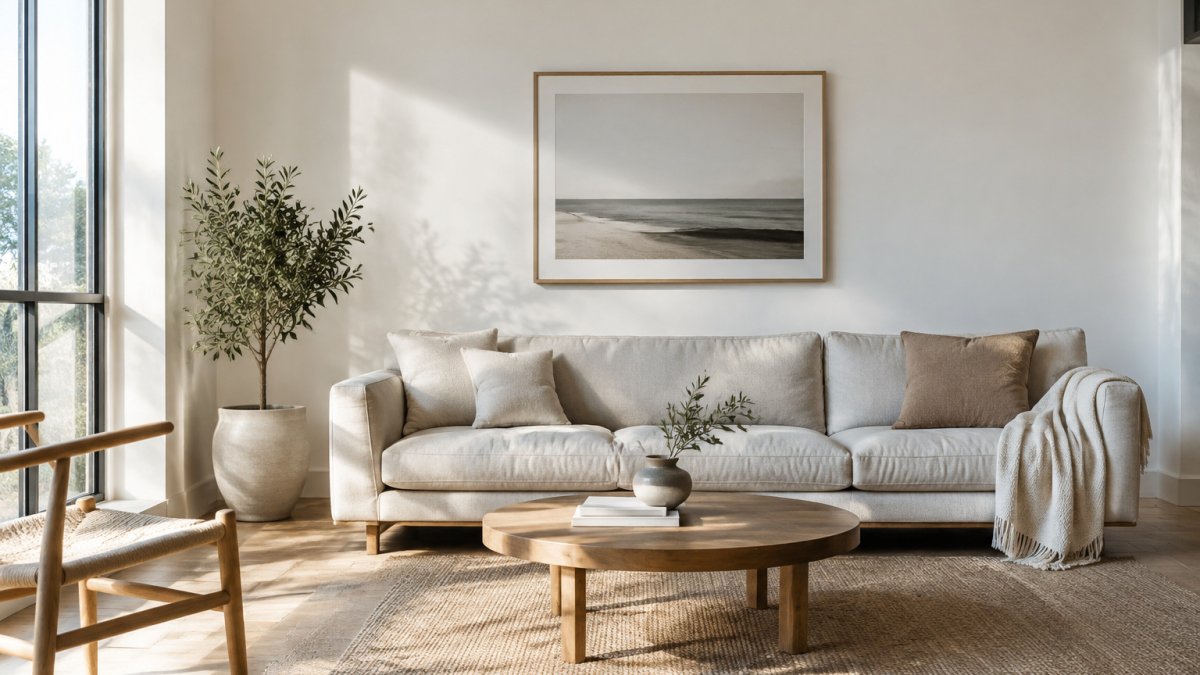
Hang the center of the piece at roughly eye level, about 150 cm from the floor. Center it over the sofa or focal point.
For a restrained look, try [PRODUCT:Neutral Shapes Minimalist Wall Art | https://www.lagomdesigns.net/products/neutral-shapes], which pairs clean geometry with soft tones. If you prefer a more abstract look, [PRODUCT:Neutral Abstract Minimalist Wall Art | https://www.lagomdesigns.net/products/neutral-abstract] adds subtle depth without visual clutter.


Our guide on How to Arrange Minimalist Gallery Walls: 2026 Guide covers layouts for larger walls.
Furnish on a Budget Without Losing the Look
A minimalist room does not require expensive furniture. It requires fewer pieces, chosen with intention. The budget-friendly approach is to invest where it matters and save where it does not. A reasonable approach is to spend on the sofa and rug, and save on side tables, lighting, and decor.
Where to Spend and Where to Save
- Sofa: Buy the best quality you can afford in a neutral fabric. A well-made sofa in a timeless shape will outlast three cheap ones.
- Rug: One large rug in a flatweave or low-pile wool grounds the room and hides floor imperfections. Size matters more than price: a rug that fits under the front legs of the sofa makes the room feel larger.
- Side tables and lighting: Secondhand wood or metal side tables can be sanded and oiled for a fraction of new cost. Basic table lamps with linen shades are widely available at thrift stores.
- Decor: Limit to one or two objects. A single ceramic vase or a stack of books from a used bookstore adds character without clutter.
DIY Hacks for Renters and Budget-Conscious Homes
- Sand and oil secondhand wood: A $10 used side table can be revived with sandpaper and a coat of Danish oil. This adds warmth and texture without a new purchase.
- Use fabric to soften cheap furniture: A linen throw over a basic armchair or a slipcover over a worn sofa instantly updates the look.
- Create art from paper: A large sheet of textured paper or a simple line drawing in a thrifted frame can serve as a focal point for under $20.
- Repurpose baskets and crates: Woven baskets from flea markets can hide remotes and chargers, doubling as storage and texture.
- Swap hardware: Replacing plastic handles on a basic cabinet with simple brass or wood pulls elevates the piece for a few dollars.
Watch out: Do not buy small decorative items just because they are cheap. Each object must earn its place, or the room will feel cluttered regardless of budget.
A Sample Budget Breakdown
By focusing on fewer, better pieces and embracing DIY updates, you can achieve a minimalist look without overspending. The key is restraint: every purchase should have a clear job in the room.
Book Your Wall Art Consultation Next Step
Start with one focal point, a three-tone palette, and one piece of art that makes the room feel calm. Once the layout works, add the rest slowly. Explore Best Minimalist Art for Calm Living: 7 Serene Picks to find a piece that fits your space.
Frequently Asked Questions
How can I make a minimalist living room feel cozy?
Add warmth through texture rather than color. A wool throw, a linen cushion, and a natural jute rug bring softness without visual noise. Keep your palette to three neutral tones, then let fabric weight and natural materials create comfort. Warm bulbs around 2700K in a floor lamp or table lamp also soften the room at night. Avoid filling the space with many small objects; one or two well-chosen pieces per surface feel calmer and more inviting than a crowded shelf.
What colors work best in a minimalist living room?
Soft whites, warm beige, greige, and muted earth tones such as clay or sage work well because they create visual calm. Choose one dominant neutral for walls, a second for upholstery, and a third for accents like cushions or wood tones. Keep contrast low to avoid a stark look. Wall art in similar neutral tones, such as the Neutral Tones Earthy Minimalism Wall Art, blends into this palette without competing for attention.
How do I style minimalist wall decor in a living room?
Start with one focal piece above the sofa or on the wall opposite the main entry. Hang it so the center sits roughly 150 to 160 cm from the floor, and keep the width of the art about two-thirds the width of the sofa. For a calmer look, choose one large piece instead of a gallery cluster. If you prefer a grid, keep spacing between frames consistent at around 5 cm. Leave generous empty wall around the art.
How do I decorate an empty living room on a budget?
Begin with the largest items: a sofa, a rug, and one piece of wall art. Buy used furniture where the frame is solid, and check that cushions are removable and washable. Rent or borrow a few items before purchasing. Prioritize one statement piece, such as a framed print, over several cheap decorations. Adding pieces gradually lets you test what suits the room before committing money to it.


