


Last Updated: November 15, 2026
Quick Summary
Style small apartment walls by giving each wall one job: one focal wall per room, one quiet wall left mostly bare, and functional walls reserved for shelves or hooks. Plan gallery layouts with paper templates before drilling, and size art to the wall and furniture below it.
- Hang art so its center sits roughly 145-155 cm from the floor, at eye level.
- Keep at least 15-20 cm between the bottom of a frame and the top of furniture.
- For a sofa, art should span about two-thirds of the sofa width.
- Lay frames on the floor and use paper templates before making any holes.
- On narrow wall runs under 60 cm, use one tall narrow frame instead of a gallery wall.
Table of Contents
- Start With a Wall-by-Wall Plan for Your Small Apartment
- How to Hang Gallery Walls Properly in a Tight Space
- Renter Friendly Wall Decor Ideas That Protect Your Deposit
- Minimalist Wall Art for Small Apartments: Sizing and Placement Rules
- Storage or Display? A Decision Framework for Small Walls
- Awkward Corners, Sloped Walls and Other Tricky Layouts
- Choose Your First Framed Piece From Our Collection
- Frequently Asked Questions
Start With a Wall-by-Wall Plan for Your Small Apartment
Most people hang art wherever a nail fits, then wonder why the room feels busy. The fix starts before you buy anything: give every wall a job. Small apartment walls work best as a short list of decisions, not a decorating spree. One wall leads, the rest support it.
A wall-by-wall plan is a simple map that assigns each wall in your apartment a single purpose: focal point, quiet backdrop, storage, or display. It stops you from spreading decor evenly, which flattens a small room.
Here is the pattern we recommend:
- One focal wall per room. Hang your largest or boldest piece here.
- One quiet wall. Leave it mostly bare, or add a single small frame.
- Functional walls get shelves or hooks, not art.
- Walk-through walls in hallways stay light so the space feels open.
This approach keeps visual clutter down and gives the eye somewhere to rest. For a small apartment, walls do the work that floor space cannot.
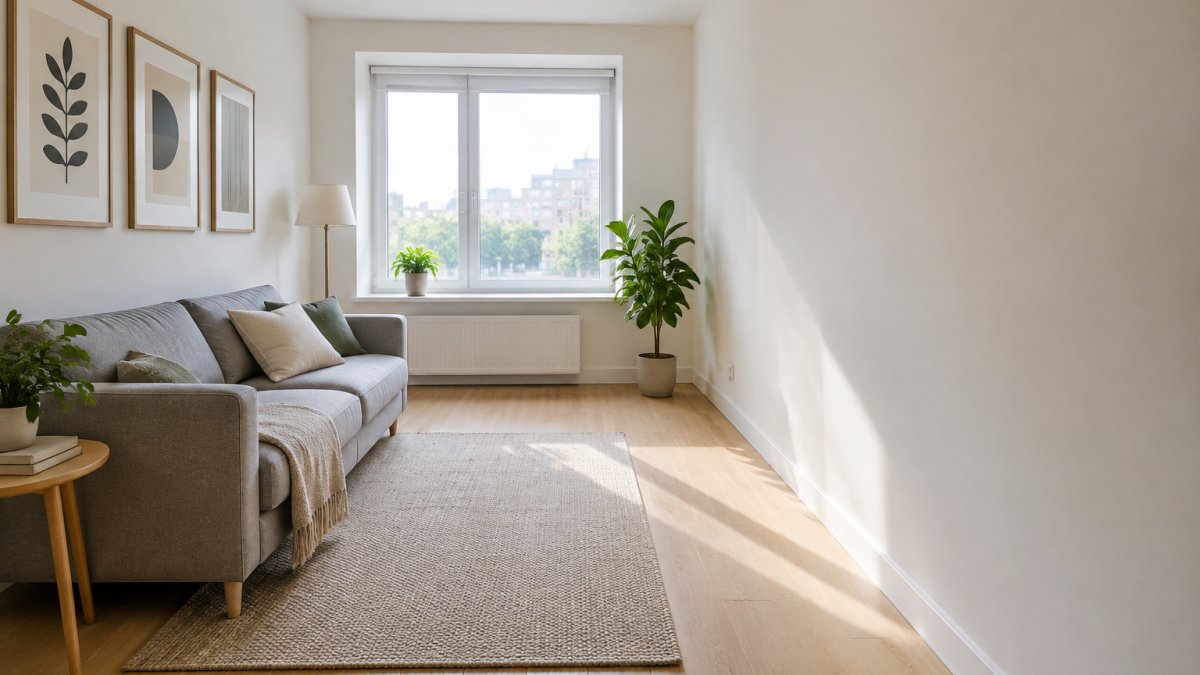
Living Room: One Focal Wall, One Quiet Wall
The living room carries the most weight, so it needs the clearest plan. Pick the wall you see first when you walk in and make it the focal point. A gallery wall or one large framed print works here.
Then treat the opposite wall as the quiet one. Resist the urge to fill it. Empty wall space is what makes a small room breathe.
If your sofa sits against a wall, hang art so its center lands roughly at eye level when seated. Keep the space above furniture light. A common mistake is stacking frames too high, which pulls the eye up and makes the room feel top-heavy.
Bedroom and Hallway: Low-Effort, High-Impact Walls
Bedrooms and hallways reward a lighter touch. In the bedroom, one calm piece above the bed is enough. Choose something soft and neutral so the room stays restful.
Hallways are where small apartment walls can shine with little effort. A narrow run of two or three small frames draws the eye forward and makes the corridor feel intentional. Keep frames close together so they read as one group.
The rule for both rooms: fewer, larger pieces beat many small ones. One good frame does more than five busy ones.
How to Hang Gallery Walls Properly in a Tight Space
A gallery wall is a group of framed pieces arranged as one unit. In a tight space, the key is planning the layout on the floor or with paper templates before you touch a nail.
Here is the method we suggest:
- Lay the frames on the floor and shuffle them until the spacing looks even.
- Cut paper templates the same size as each frame and tape them to the wall.
- Keep gaps consistent, usually a few centimeters between frames.
- Anchor the group around one center line so it feels balanced.
- Hang the center piece first, then work outward.
For a small wall, a tight grid of same-size frames reads cleaner than a scattered arrangement. If you want the full step-by-step method, our guide on how to hang gallery walls properly walks through measuring, leveling, and hardware. And if your space is genuinely tight, see how to arrange a gallery wall in a small apartment for layouts built around limited wall runs.
Watch out: hanging frames before checking the whole layout is the most common gallery wall mistake. A crooked or crowded group is hard to fix once the holes are in.
Renter Friendly Wall Decor Ideas That Protect Your Deposit
Renters face a real constraint: every hole is a negotiation with the lease. Renter friendly wall decor ideas solve this by using methods that come off clean.
Start with removable adhesive strips and hooks rated for the weight of your frame. Check the rating on the pack and stay under it. Lightweight frames are your friend here.
Other renter-safe options:
- Leaning frames on a shelf or ledge, no holes at all.
- Removable wallpaper on one accent wall.
- Tension rods or picture ledges that rest without drilling.
- Adhesive hooks for lightweight shelves and small frames.
Always read your lease rules before hanging anything. Keep a small stash of filler and touch-up paint for nail holes if you do drill. For more ideas that respect a deposit, our complete guide to minimalist wall decor ideas covers renter-safe styling in depth.
Minimalist Wall Art for Small Apartments: Sizing and Placement Rules
Minimalist wall art for small apartments works best when the size matches the wall, not the furniture. Too-small art on a big wall looks lost. Too-large art crowds a narrow space.
Use these sizing and placement rules as a starting point, then adjust for the furniture below the wall:
| Wall Width | Art Width | Placement Height (center) |
|---|---|---|
| Under 1 m | 30-40 cm | Eye level, roughly 145-155 cm |
| 1-2 m | 50-70 cm | 145-155 cm |
| Over 2 m | 70 cm or a grouped set | 145-155 cm |
Hang art so the center sits around eye level, and keep at least 15-20 cm between the frame and the top of furniture. For a sofa, art should span about two-thirds of the sofa width.
A common mistake is to hang art too high. The center of artwork is usually placed at roughly 145-155 cm from the floor, which is eye level for an average adult.
For gallery walls, the same logic applies to the group as a whole: treat the entire arrangement as one piece and size it to the wall and furniture below. A tight grid of same-size frames reads cleaner on a small wall than a scattered arrangement.
Minimalist pieces earn their place because they calm a room instead of competing with it. Our rules for choosing art for small spaces go deeper on scale and fit.
Watch out: measuring the wall but not the furniture below it leads to art that looks disconnected. Always check the width of the sofa, bed, or table before you choose a frame size.
Storage or Display? A Decision Framework for Small Walls
Every small wall forces a choice: do you store things on it, or show things on it? Getting this wrong is why some walls feel cluttered and others feel empty.
Use this quick framework:
- If you are short on storage, prioritize wall-mounted shelves and floating units. Function first.
- If storage is handled elsewhere, use the wall for display and let it breathe.
- If the wall is in a high-traffic spot, choose closed storage to hide mess.
- If the wall is a focal point, choose display and keep it curated.
The trap is trying to do both badly. A shelf crammed with objects and art reads as visual noise. Pick one job per wall and commit.
Floating shelves and wall-mounted storage free up floor space, which matters most in a small apartment. But keep shelves sparse. A few well-chosen objects do more than a full shelf.
Awkward Corners, Sloped Walls and Other Tricky Layouts
Odd layouts scare people into leaving walls bare. That is a missed chance.
Narrow wall runs (under 60 cm wide). These are the strips between a door and a corner, or beside a window. Do not force a gallery wall here.
Alcoves and recessed walls. An alcove is a natural display zone because the side walls frame it for you.
Walls interrupted by doors and windows. These walls are common in apartments and often left bare because there is no clean center. The fix is to work with the interruptions, not against them.
Corners. A tall narrow frame or a small stacked pair fills the gap without crowding. If the corner is in a high-traffic path, keep the frame flush to the wall and avoid protruding shelves that can be knocked.
A few practical rules for all tricky spots:
- Measure twice before drilling near a slope, corner, or opening.
- Use a single piece rather than a group where space is tight.
- Keep clear of doors and walkways so nothing gets knocked.
- Check the view from the main seating area, not just from the doorway, odd walls can look fine from one angle and awkward from another.
The goal is to make odd walls look deliberate, not forgotten. One well-placed frame turns a dead corner into a feature, but the frame has to fit the wall type, not just the room.
Choose Your First Framed Piece From Our Collection
You do not need to fill every wall at once. Start with one piece on your focal wall and build from there. That is the calmest way to style small apartment walls, and it keeps you from overbuying.
Our framed minimalist prints are made to order on matte paper sourced from Japan, framed in Ayous wood, and arrive ready to hang with hardware included. Because each piece is made to order, it helps reduce overproduction and waste.
Start with a single piece like our Neutral Shapes or Shape and Shadow print, then grow a small gallery wall over time. Browse the full collection and choose your first framed piece from our collection to anchor your space.
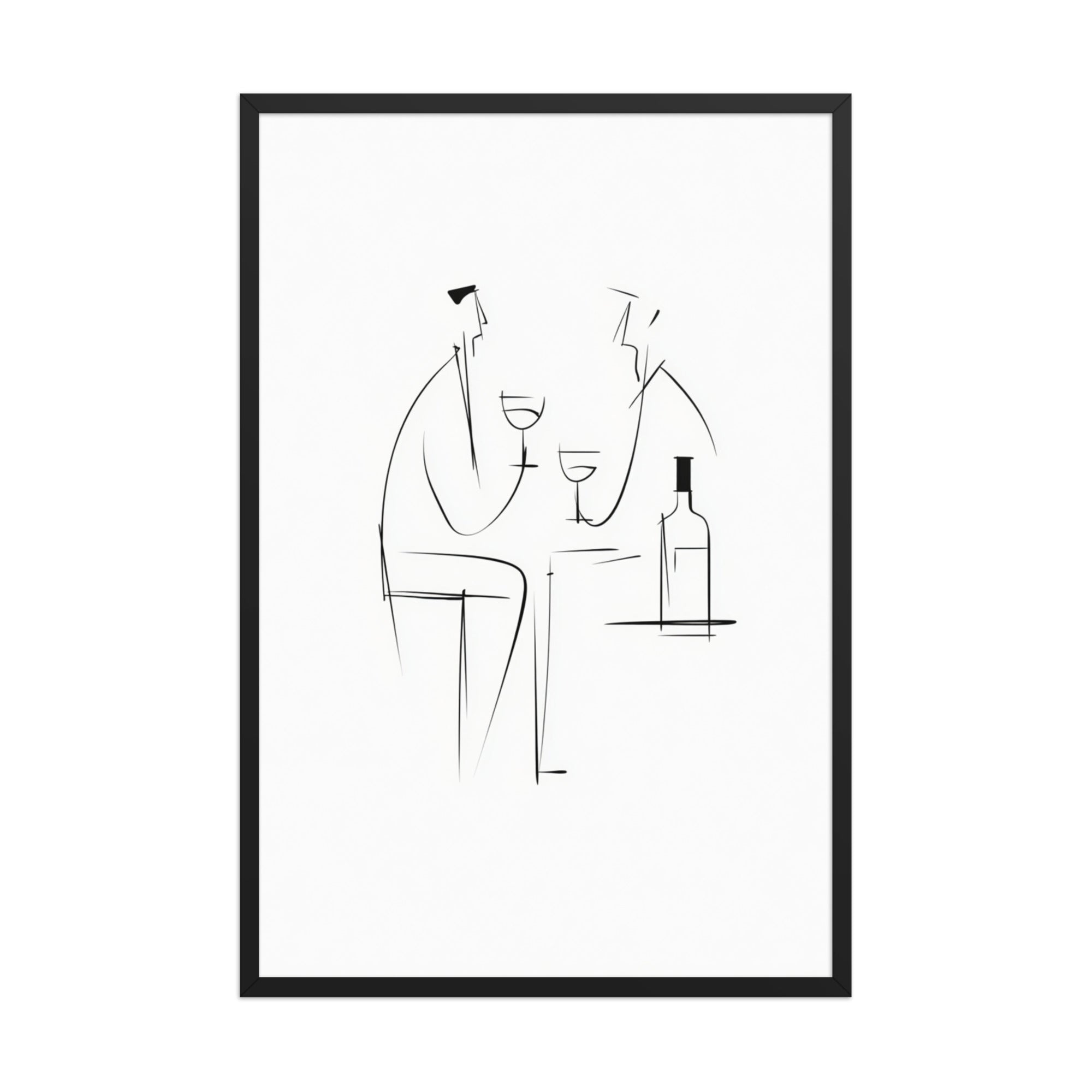
Your walls are the biggest untapped space in a small apartment. Give each one a job, hang with a plan, and let a few intentional pieces do the work. LagomDesigns makes framed minimalist prints that arrive ready to hang, in sizes and finishes that suit tight layouts, so you can build a calm wall one piece at a time. Get started with LagomDesigns and turn your smallest walls into your calmest corners.
Frequently Asked Questions
What is the 3-5-7 rule in decorating?
The 3-5-7 rule is a guideline for grouping decorative objects or art in odd numbers: three, five or seven pieces. Odd numbers create visual balance because the eye cannot pair them off symmetrically. On small apartment walls, three frames in a row or a five-piece gallery arrangement usually works best; seven pieces can overwhelm a narrow wall. Treat it as a starting point, not a strict rule, and adjust based on the wall's width and the size of each frame.
How do I hang art in a rental apartment without damaging walls?
Adhesive strips and hooks are the safest option for painted drywall and most plaster, and they typically hold lightweight frames without nails. Check the pack's stated weight limit and stay well under it, since made-to-order framed prints vary in weight. For heavier pieces, use a single small nail and fill it with spackle before you move out, or ask your landlord about picture rails. Always clean the wall first so adhesive grips properly, and remove strips slowly to avoid pulling paint.
What are the best types of wall art for small spaces?
Minimalist wall art for small apartments works best when it has a simple composition, soft neutral tones and a clean frame. Busy, high-contrast prints compete with furniture and make a narrow room feel tighter. A single larger piece often reads calmer than many small frames, and a matching set of two or three prints can fill a wall without visual noise. Choose matte paper over glossy finishes to reduce glare in rooms with limited natural light.
How high should I hang art on a small apartment wall?
Hang the centre of the artwork at roughly eye level, about 145 to 150 centimetres from the floor. In a small room, going slightly lower makes ceilings feel taller. Above a sofa, leave 15 to 25 centimetres between the frame's bottom edge and the furniture back. For a gallery wall, lay the frames on the floor first, measure the full arrangement, then transfer those measurements to the wall before installing any hardware.


