


Last Updated: November 5, 2026
Quick Summary
Art prints fade because light, oxygen, and moisture slowly break down the colorants and paper they sit on, which is why art prints fade faster in bright rooms. Sunlight carries ultraviolet radiation that attacks ink directly, and visible light does damage too, just more slowly. Acidic paper and cardboard backing also release compounds that yellow a print from behind.
- Pigment-based inks last longer than dye-based inks because pigment particles sit on the paper surface and resist light well.
- UV-filtering glazing slows light damage by blocking most ultraviolet radiation but does not stop visible light.
- Keep rooms between roughly 40 and 60 percent relative humidity to prevent paper cracking and mold.
- Swap prints between bright and dim walls every year or two to spread light exposure across your collection.
- Compare the exposed area with the edge hidden under the frame mat to spot color shifts early.
Table of Contents
- The Science of Fading: Light, Inks, and Paper
- Will Indirect Sunlight Fade Pictures?
- Dye-Based vs Pigment-Based Inks: What Lasts Longer
- How to Keep Art Prints from Fading: A Step-by-Step Checklist
- Art Glass UV Protection: What It Can and Cannot Do
- Do Canvas Prints Fade Over Time?
- How to Compare Print Longevity Claims and Spot Discoloration
- Find Framed Prints Built to Last at LagomDesigns
- Frequently Asked Questions
The Science of Fading: Light, Inks, and Paper
Art prints fade because light, oxygen, and moisture slowly break down the colorants and paper they sit on, which is why art prints fade faster in bright rooms. Sunlight carries ultraviolet radiation that attacks ink directly. Visible light does damage too, just more slowly. The paper matters as much as the ink: acidic paper and cardboard backing release compounds that yellow a print from behind. Fading is rarely one cause. It is three or four small attacks happening at once, every day, for years.
Will Indirect Sunlight Fade Pictures?
Yes. Indirect sunlight will fade pictures, just more slowly than a sunbeam hitting the glass. A wall that never sees direct sun still receives daylight all day, and that light adds up. Ultraviolet radiation is the fastest attacker, but visible light also drives color loss over time. Think of exposure as a running total rather than a single event. A print near a bright window for two years can lose more color than one in a dim hallway for ten. Distance from the window and time on the wall both count.
Dye-Based vs Pigment-Based Inks: What Lasts Longer
Pigment-based inks last longer than dye-based inks. Pigment particles sit on the paper surface like tiny stones, and they resist light well. Dye-based inks dissolve into the paper, which gives vivid color but fades faster under light exposure. Many photo prints use dye inks. Fine art and archival prints usually use pigment inks. Neither lasts forever, and both depend on paper quality and display conditions. If print longevity matters to you, ask which ink type a seller uses before you buy. A seller who cannot answer is telling you something.
How to Keep Art Prints from Fading: A Step-by-Step Checklist
Here is our practical checklist for protecting art prints at home. It takes about an hour to set up and a few minutes a year to maintain. The steps are ordered by impact: the first four prevent the most common and irreversible damage, while the later steps are refinements that extend the life of a print already in a good spot.
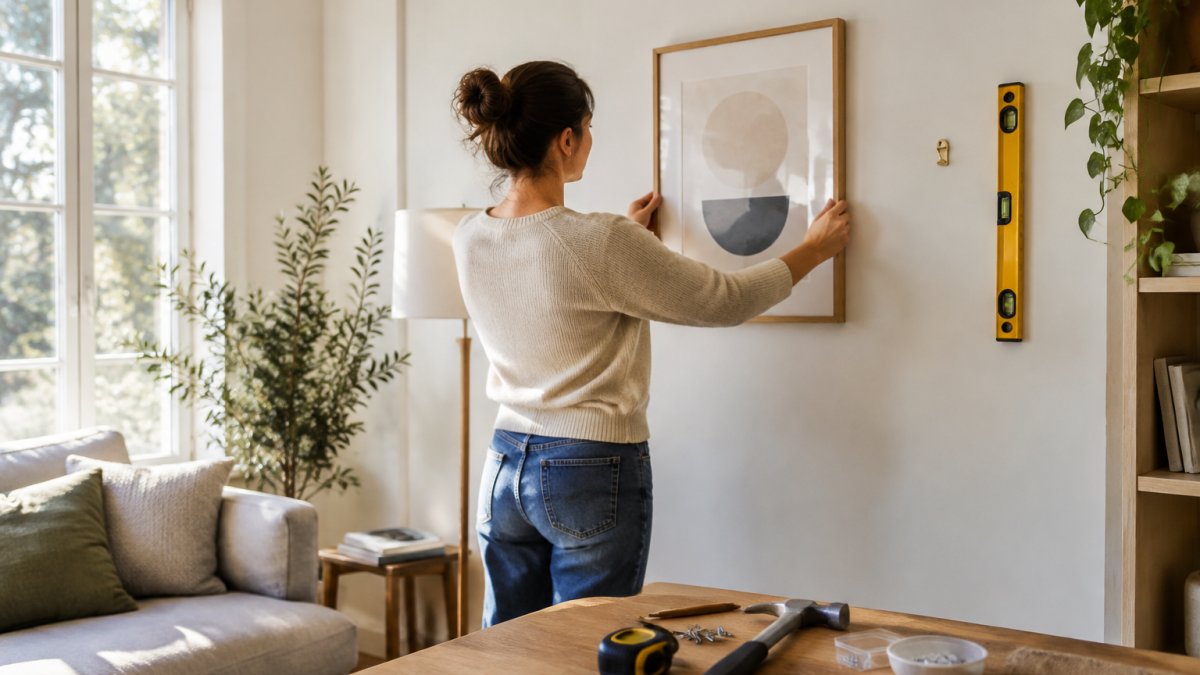
- Pick the wall first. Choose a spot away from direct sun and far from radiators or stoves. Heat accelerates chemical breakdown in both ink and paper, and a wall above a radiator is one of the fastest ways to age a print. Watch out: a wall that looks dim at noon may catch a low sunbeam in winter, so check the spot at different times of year if you can.
- Check the light through the day. Watch the wall at morning, noon, and evening before you commit. A wall that receives two hours of direct sun is a different risk category from one that only sees reflected daylight. If you cannot avoid a bright wall, plan for UV glazing and accept that the print will still change slowly.
- Frame with UV-protective glazing. Glass or acrylic with UV filtering slows light damage by blocking most ultraviolet radiation. It does not stop visible light, so treat it as a brake rather than a shield. Watch out: cheap acrylic labeled "UV protected" may only block a fraction of UV, so ask for the transmission rating if the seller has it.
- Use acid-free materials. Acid-free mats and backing board stop paper degradation from behind. Acidic materials release compounds that yellow and embrittle paper, and the damage is often worse than light fading because it comes from the back where you cannot see it starting.
- Ditch the cardboard. Standard cardboard backing is acidic and yellows prints over time. Corrugated cardboard also holds moisture and can transfer stains. Replace it with acid-free foam board or archival corrugated plastic.
- Add a backing seal. Tape the back of the frame with acid-free framing tape to keep dust and humidity out. A sealed frame buffers the print from room humidity swings, which reduces rippling and mold risk.
- Control humidity. Keep rooms between roughly 40 and 60 percent relative humidity where you can. Below 40 percent, paper can dry and crack; above 60 percent, mold and foxing become likely. A cheap hygrometer is enough to know where you stand.
- Rotate your collection. Swap prints between bright and dim walls every year or two. Rotation spreads light exposure across your collection and gives you a chance to inspect each piece closely.
- Store spares flat and dark. Keep unframed prints in an acid-free folder, away from heat and damp. Rolled storage is acceptable for short periods but can cause curling and surface abrasion over years; flat storage in a dark drawer or portfolio box is safer.
- Check annually. Look for color shifts and note them early. Compare the exposed area with the edge hidden under the frame mat, which acts as a control strip showing the print's original color.
If you want the framing side handled properly, our guide on how to frame art prints professionally walks through the details that affect fading.
Art Glass UV Protection: What It Can and Cannot Do
Art glass UV protection blocks most ultraviolet radiation, but it does not stop fading. It is a brake, not a wall. UV-filtering glazing reduces the fastest form of damage, which buys your print years. Visible light still passes through, and visible light still fades colorants over time. So a framed print behind UV glass in a sunbeam will still change. The honest position: UV glazing is worth it, and it works best combined with sensible placement. Never treat it as permission to hang a print in full sun.
Do Canvas Prints Fade Over Time?
Canvas prints do fade over time, and canvas brings its own risks. The fabric surface holds ink differently from paper, and some canvas prints are coated with varnish for protection. Varnish helps with light and handling, but it ages too. Canvas also stretches on a frame, and movement plus humidity can lead to microcracking in the coating, which shows as fine lines and dull patches. Storing a canvas print rolled in a warm room is worse than hanging it. If you buy canvas, ask about the ink type and any protective coating.
How to Compare Print Longevity Claims and Spot Discoloration
Print longevity claims mean little without the test conditions behind them. A seller who says a print "lasts a lifetime" has told you nothing unless you know the light level, humidity, and framing assumed. Most longevity ratings come from accelerated aging tests that expose prints to intense light and then extrapolate to normal display conditions. That extrapolation depends on assumptions: a rating of "100 years" might assume a dim room with UV glazing and acid-free framing, while the same print in a bright sunroom could show noticeable change in a few years. Ask three questions: which ink type, which paper, and under what display conditions? If the seller cannot answer, treat the claim as marketing rather than a specification.
A practical way to compare claims is to look for the test standard named. Ratings that reference a recognized standard, such as those used by print permanence testing labs, are more comparable than vague statements. Even then, the number describes the point at which a trained observer notices a defined amount of change under specified conditions, not the point at which the print becomes unacceptable to you. Your tolerance for color shift may be higher or lower than the test threshold.
If you are weighing a cheap print against a premium one, our comparison of high quality vs cheap wall art shows where the real differences surface. To spot fading, check for a color shift toward yellow or blue, a washed-out look, and a visible difference between the exposed area and the edge hidden under the frame. Fading is usually even across the exposed area, while other damage looks patchy. Discoloration can also come from acidic backing or moisture stains, which look patchy rather than evenly faded. Brown spots or tide-line rings point to water contact, and a musty smell suggests mold. If you see flaking, cracking, or a print that is stuck to the glass, stop handling it and consult a conservator; those are signs of damage that home fixes can make worse.
| Sign You See | Likely Cause | What To Do |
|---|---|---|
| Even, gentle color loss | Light exposure over years | Move to a dimmer wall, add UV glazing |
| Yellow-brown patches | Acidic backing or cardboard | Reframe with acid-free materials |
| Wavy or rippled paper | Humidity swings | Control room humidity, reseal frame |
| Fine cracks on canvas | Coating microcracking | Reframe, avoid heat sources |
| Tide-line stains | Past water contact | Consult a conservator |
| Flaking or stuck to glass | Binder failure or condensation | Do not handle; consult a conservator |
Find Framed Prints Built to Last at LagomDesigns
Our framed minimalist prints are made to order on museum-quality matte paper sourced from Japan. Each piece arrives professionally framed and ready to hang, available in four sizes and three frame finishes. If you want framed art that skips the guesswork, browse our ready to hang framed art collection and choose a piece built for the long run.
Frequently Asked Questions
Can a faded print be restored?
True restoration of a faded print is rarely possible because fading is permanent chemical damage to the colorants. A paper conservator can sometimes reduce discoloration from acidic backing or surface grime, but lost color cannot be brought back. Prevention is far more effective than restoration, so keep prints out of direct sun, use UV-protective glazing, and frame with acid-free materials from the start.
Will indirect sunlight fade pictures?
Yes. Indirect sunlight still contains ultraviolet radiation and visible light that break down inks and paper over time. A print placed across the room from a window can fade gradually, especially if it faces the glass for hours each day. Rotate prints periodically, use UV-filtering glass, and avoid spots that receive strong reflected light to slow the process.
Does UV-protective glass prevent art prints from fading?
UV-protective glass blocks most ultraviolet radiation, which is the fastest cause of fading, but it does not stop visible light from doing damage. Think of it as a strong reduction rather than a guarantee. Combine art glass UV protection with sensible placement away from direct sun and harsh bulbs, and your print will hold its color far longer than an unprotected piece.
Do canvas prints fade over time?
Canvas prints can fade, especially if they use dye-based inks and sit in bright rooms. Pigment-based archival inks on quality canvas resist fading much better, and a varnish coating adds another layer of protection. Even so, canvas left in direct sun will shift in color over the years. Hang canvas away from windows and consider a UV coating to extend its life.
The real test of any print is how it looks on your wall in five years, not five minutes. LagomDesigns makes that easy: made-to-order framed prints, museum-quality matte paper from Japan, and acid-free framing that gives your artwork a fair fight against time. Search our store and find a piece that stays calm and clear for years to come.


